Bunions, Swollen Feet or Toes That Overlap After 60? These Wide Toe Box Shoes Are Helping Women Walk Comfortably Again
By Carol BennettOctober 2, 20269:12 am EST
If your bunion starts aching the moment you put your shoes on, you're not alone. Decades of narrow toe boxes, even in shoes labelled "wide", can leave your feet cramped, swollen and pressing against the sides, with that "kick them off the second I sit down" feeling.
I know that feeling well. I'm 63, I've had a bunion on my left foot since my forties, and by last spring I was planning my errands around where I could sit down. What finally changed things wasn't another insole. It was a shoe shaped like an actual foot. Here are 10 things I wish I'd known sooner.
1. You've Tried Every "Comfort" Shoe. They Still Squeeze Your Toes.
The big-name brands all promise a roomier fit. But most of their shoes are still built on narrow, pointed moulds: they widen at the ball of the foot, then pinch back in right where your toes are. Your bunion still presses against the side. Your toes still overlap by noon.
The problem isn't that you haven't found the right brand. It's that very few shoes are shaped like a real foot after 50: widest at the toes, with room for a bunion and for toes that want to spread.
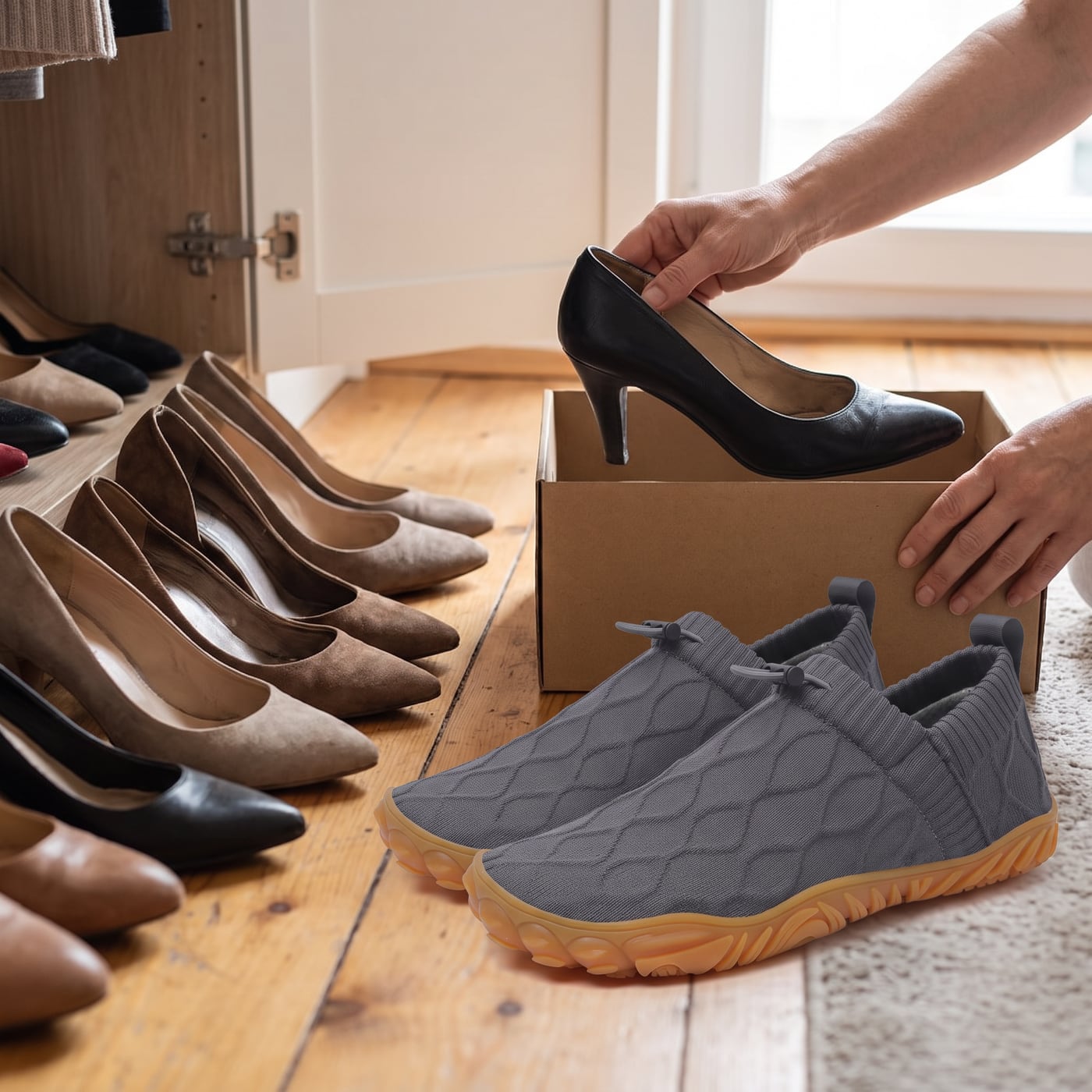
StrideFlex is built the other way around. The front is wide and rounded, so your toes finally have somewhere to go.
2. Finally, a Wide Toe Box That Doesn't Look Orthopedic
Most shoes sold as "wide" or "extra-wide" come with a trade-off: they look like medical footwear. Beige. Velcro. Clunky. The kind of shoe you'd rather not wear to lunch with friends.
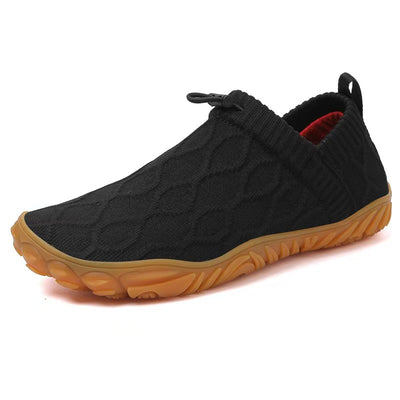
StrideFlex looks like a casual knit sneaker: a soft wave-pattern knit, a honey-coloured sole and four easy colours (black, grey, off-white and olive). It goes with jeans, leggings, linen trousers, even a summer dress.
The room is in the shape, not in the look. Nobody knows unless you tell them.
3. A Thin, Flexible Sole That Moves With Your Foot
Many "comfort" shoes keep adding padding: thick, squishy soles that feel lovely in the store but lift your heel above your toes and make every step a little wobbly.
StrideFlex does the opposite. The gum rubber sole is thin and flexible (you can bend the shoe in half in your hand) and it's level from heel to toe. Your foot can move the way it was made to, with a grippy tread underneath for wet pavements and garden paths.
Good to know: if you've worn thick, cushioned shoes for years, start with a few hours a day. The free Happy Feet Guide that comes with your order has a gentle week-by-week plan.
4. Room to Spread Your Toes Means a Wider Base to Stand On
Here's something most of us never think about: your toes help you balance. When they can spread out, the front of your foot has a wider base to stand on, more like a tripod than a pinpoint.
Squeeze them into a narrow toe box and that base shrinks. More room at the front means a wider base under you.
With a wide, foot-shaped front and a thin sole that lets you feel the ground, your feet can do their job again on steps, slopes and uneven paths.
5. Roomy Enough for Bunions, Hammertoes and Feet That Swell by Afternoon
Bunions. Hammertoes. Toes that cross over. Feet that feel half a size bigger at 4 pm than they did at 8 am. If any of these sound familiar, you already know: most shoes were not made for your feet.
StrideFlex has a front that's wide and rounded instead of pointed, and a soft stretch-knit upper that gives as your feet swell during the day. There's no stiff edge pressing on the side of your bunion, and your toes don't curl against the front.
And the drawcord lets you loosen or snug the fit in a second, morning or evening.
Garden paths, terrace coffees, old-town steps, out the door. One pair.
6. Made for Women Who Aren't Slowing Down
A morning in the garden. Coffee with a friend on a sunny terrace. The old stone steps on your city trip. Out the door before breakfast.
You don't want to slow down, so your shoes shouldn't hold you back.
StrideFlex is light and flexible, and it slips on without bending down to tie laces: the knit stretches over your heel and the drawcord snugs it up. Step in, pull, go. It's the pair by the door you'll reach for every time.
The cost of comfortable feet
Free tracked shipping · 30-day returns
Typical shop prices, rounded.
7. About Half What You'd Pay for a Big-Brand "Wide" Sneaker
Custom-made insoles. Big-brand "wide" walking sneakers. Specialist comfort shoes. Most of us have spent a small fortune trying to make our feet comfortable.
Right now StrideFlex Wide is $84.95 with free tracked shipping (instead of $139.90), and your order comes with two free foot-care e-books. A wide toe box, a soft knit and a flexible sole, for about half what you'd pay for a big-brand pair.
8. Your Feet at 65 Aren't the Feet You Had at 45
Over the years, the ligaments in our feet relax and our arches settle. Many women find their feet are longer and wider than they were at 40, and the natural padding under the ball of the foot gets thinner too.
That isn't a failing. It's simply how feet change. Your feet have changed. Your shoes haven't.
That's why so many "comfortable" shoes still hurt: they were shaped for a younger foot. You haven't failed at finding shoes. The shoes failed to keep up with you.
No painful break-in
Your free Happy Feet Guide has the full week-by-week plan.
9. What Your First 30 Days Look Like
No stiff leather to break in: the soft knit gives from the first minute, and your toes have room straight away.
Day 1: try them on at home and wiggle your toes. If they're not right for you, you get your money back within 30 days, even if you've worn them.
Week 1: if you've worn thick, cushioned shoes for years, wear them a few hours a day while your feet get used to a thinner, level sole. That's normal, and it's why your order comes with a simple plan to ease in.
Day 30: they're simply your everyday shoes. Dog walks, the weekly shop, standing at the stove, without counting the minutes until you can take them off.
10. Do the 3-Point Shoe Check Before You Buy Another Pair
You don't need an appointment to see whether a shoe suits your feet. Try this at home with any pair you own:
1. The trace test. Stand on a sheet of paper and trace around your foot. Put the shoe next to it. If the outline of your toes is wider than the front of the shoe, that shoe is squeezing them.
2. The bend test. Hold the shoe and bend it. It should flex where your toes bend, not stay stiff as a board.
3. The level test. Look at it from the side. Is the heel much higher than the toes? Then you're tipped forward all day.
StrideFlex was made to pass all three: a wide, rounded front, a sole that bends and a level heel.
How to Get Your StrideFlex Wide (39% Off + Free Shipping)
Right now, StrideFlex Wide is $84.95 (down from $139.90) with free tracked shipping, while this offer lasts.
Step 1: Pick your colour and size. Between sizes? Go for the larger one; the drawcord snugs the fit.
Step 2: When they arrive, slip them on. The knit needs no breaking in.
Step 3: Wear them to walks, errands and family days, and wonder why you put up with narrow shoes for so long.
Helpful tip: if you know a woman who's always kicking her shoes off under the table, this is the kind of gift she'll actually use.
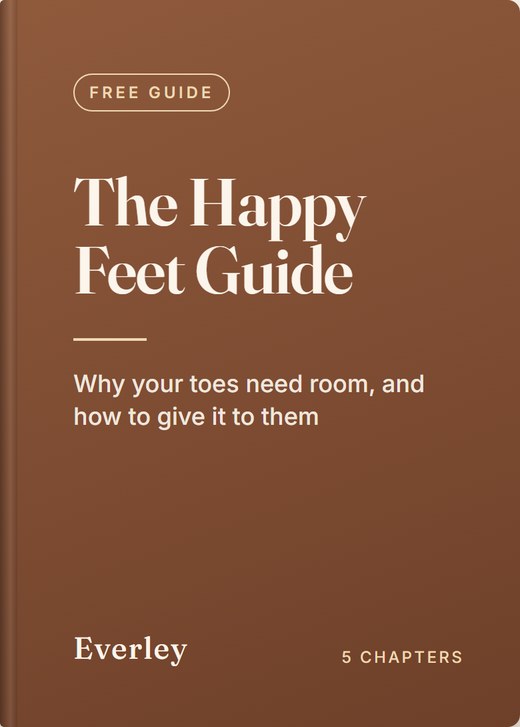
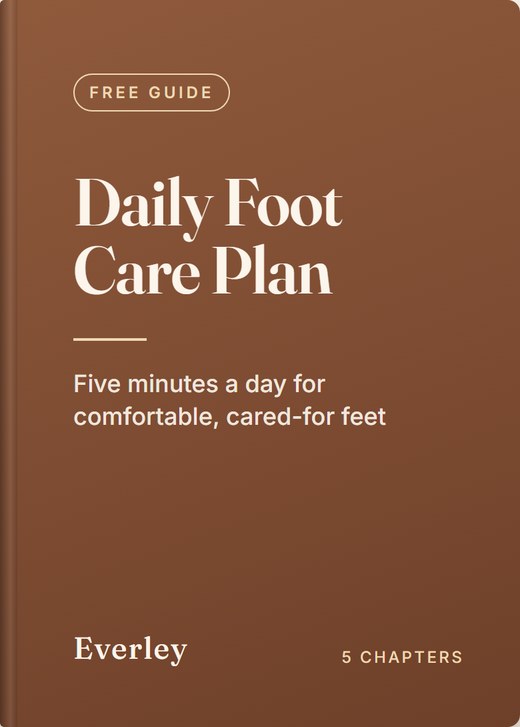
+ 2 free e-books with your order$29.95 value each — FREE
30-day returnsWear them for 30 days. Not for you? We refund the item price, even if you've worn them. No need to send them back.
Free tracked shipping · 30-day returns · Secure checkout
Advertorial. This article was written by Everley about our own product. Carol's story reflects her own experience; individual results vary. Videos are illustrative. StrideFlex is a comfort shoe, not a medical device. If you have diabetes, circulation problems or a foot condition, ask your doctor or podiatrist before changing your footwear.
30-day money-back guarantee, even if you've worn them. See our returns policy for details.